TVS Electric Cycle: Budget daily commuters and students are now focusing on lowest running cost, zero fuel dependency, and easy charging instead of speed performance, and this viral launch discussion directly targets those priorities. Reports claiming long assist range and ultra-low entry pricing have created strong buzz in student and delivery rider segments. However, no detailed official production specification sheet is publicly confirmed yet. If even partially accurate, this product could target users currently using petrol scooters for short city travel.
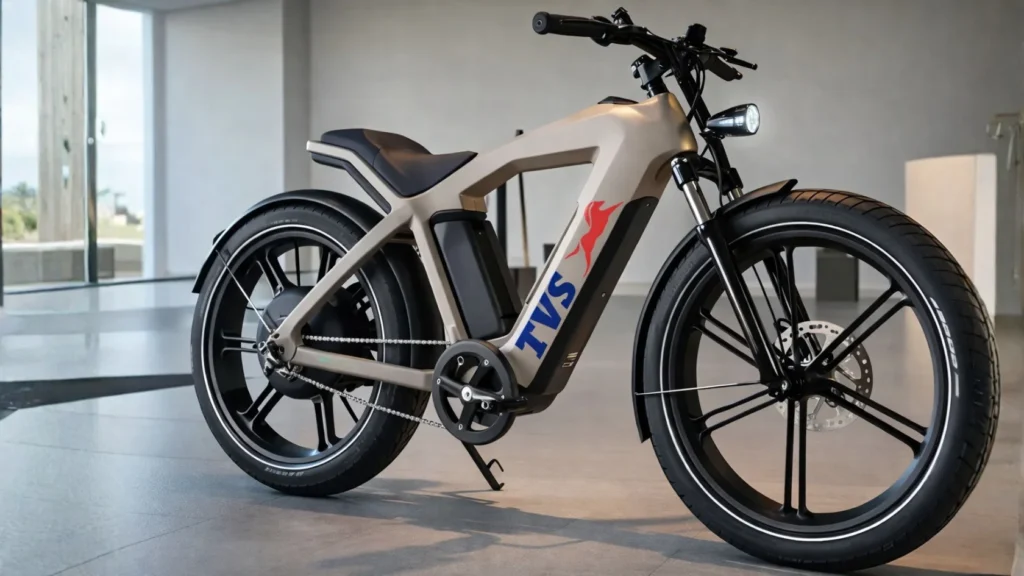
Frame Design and Daily Commuter Practicality
If positioned as a mass student commuter electric cycle, frame construction would likely use lightweight alloy or reinforced steel to balance durability and cost. Upright riding posture would support long daily commute comfort. Battery placement would likely be inside frame tube or rear carrier mount for weight balance. Total cycle weight would likely stay near 22–27Kg depending on battery size. Focus would likely remain on durability and low maintenance instead of sports cycling performance.
Also Read: Bajaj Electric Cycle Pro Launch.! 150Km Assist Range, Removable Battery and ₹6000 Down Payment
Battery Capacity and Assist Range Reality
If 140Km assist claim is based on eco pedal assist mode, battery capacity would likely fall between 0.6kWh to 0.9kWh. In real mixed riding conditions using medium assist, realistic assist range would likely stay near 85–110Km depending on rider weight, road slope, and assist level. Charging time using standard home socket charger would likely stay near 3–4 hours full charge. Removable battery option is possible but not confirmed.
Motor Power and Speed Regulation Reality
If following Indian electric cycle regulations, motor output would likely stay near 250W continuous rated power. Assisted top speed legally usually stays near 25Km/h to avoid licence and registration requirement. The 75Km/h viral claim is unlikely for an electric cycle category and would move the product into electric bike regulatory segment if true. Torque delivery would likely focus on start-stop city riding and small incline support.
Features and Smart Utility Possibility
If positioned as a smart student commuter, expected features could include digital display showing battery level, assist mode, and speed. Possible mobile app connectivity could support battery health monitoring and anti-theft alerts. Basic suspension fork and disc brake setup could be expected for city road comfort and safety. GPS tracking may be optional if designed as tech-focused product.
Price and Market Reality
The ₹5,000 down payment and ₹19,000 total price viral claim likely refers to entry configuration or promotional launch pricing. Realistic full product pricing could likely fall between ₹22,000 to ₹35,000 depending on battery size and smart feature inclusion. At ₹20,000–₹25,000 level, most buyers would likely choose full payment instead of EMI. Electricity running cost could remain extremely low near ₹0.05 to ₹0.10 per km depending on electricity tariff.
Disclaimer: This article is based on viral launch buzz, early reports, and typical electric cycle industry benchmarks. Final specifications, pricing, assist range, speed capability, and launch details may change or may not materialise. Buyers should wait for official company announcements before making purchase decisions.