TVS Electric Cycle is getting attention among students because it targets the simplest need in college life: cheap daily mobility without petrol expense. This e-cycle is being positioned as a first EV for students with a 100Km range figure, a 35km/h usable speed figure, and a ₹999 entry amount that makes the purchase feel accessible. For poor and middle-class families, the appeal is clear because a cycle that runs on charging instead of fuel can reduce monthly travel spending sharply. The focus is also on practicality, because students need something that can handle short city trips, coaching classes, and daily campus movement without constant breakdown stress.
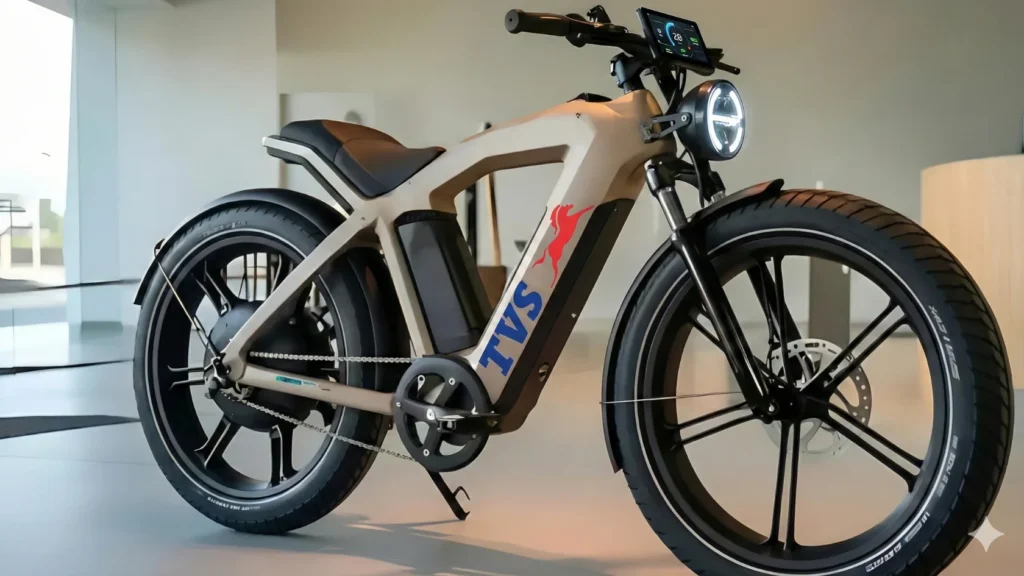
Modern Design and Stylish Exterior
TVS electric cycle is expected to follow a clean, sporty commuter look that fits student use rather than heavy touring. A strong frame structure, balanced handlebar geometry, and a stable wheelbase matter more than flashy styling because daily campus roads include potholes and speed breakers. Tyres need good grip for wet roads, and mudguards help in rain conditions. For students, the exterior value is also about durability, because the cycle will be parked outside colleges and coaching centres daily and must survive dust, scratches, and rough handling without looking worn out quickly.
Also Read: Bajaj Electric Cycle Pro Launch.! 150Km Assist Range, Removable Battery and ₹6000 Down Payment
Interior and Cabin Experience
For an electric cycle, the “cabin” experience translates into riding comfort and daily usability. Seat cushioning, saddle height adjustability, and handlebar posture decide whether a 30–60 minute ride feels manageable. A stable pedal assist feel reduces fatigue, especially for riders carrying backpacks. A simple display showing battery percentage, assist mode, and speed helps students plan daily travel without anxiety. Practical elements like a strong stand, chain guard, and bottle holder style utility improve daily ownership because students use the cycle like a daily tool, not a weekend hobby product.
Battery and Driving Range
The headline range figure being shared is 100Km on a full charge, which is attractive for student commuting. At 10Km per day, 100Km covers 10 days, and at 15Km per day it covers 6.7 days on paper. Real range depends on rider weight, tyre pressure, road slope, wind, and assist mode, so day-to-day usage usually lands below the top figure in many situations. For students, the real advantage is fewer charging days per week and predictable travel planning for classes, tuition, and part-time work trips without spending money on petrol.
Charging and Performance
A student e-cycle works best when charging is simple and safe. Charging through a normal home socket is the base requirement because hostel and rented-room setups also rely on basic sockets. The 35km/h speed figure makes it usable for city lanes and short main-road stretches, but real performance depends on braking stability and tyre grip. Smooth motor assistance and predictable throttle response reduce accidents in mixed traffic. For students, performance means easy climbs on flyovers, stable control on broken patches, and safe stopping power, because confidence matters more than speed in daily city riding.
Safety and Technology Features
Daily safety depends on brake quality, lighting, and stability. Strong front and rear brakes are essential because students ride in traffic with buses and autos. Front and rear lights improve visibility for early morning classes and evening coaching travel. A battery lock helps reduce theft risk, and basic anti-tamper security adds confidence for open parking. Warranty clarity on battery and motor matters because those are the highest-cost parts in an e-cycle. Service availability and spare parts access also matter because students cannot afford long downtime when daily commute depends on the cycle.
Price and Availability in India
TVS Electric Cycle is positioned with a ₹999 entry amount, which works as a booking-style start, and the final price decides the real affordability. If the total price is ₹14,999 and ₹999 is paid first, the balance becomes ₹14,000 and on a 12-month plan at 18.00% interest the EMI becomes ₹1,281 per month, while a higher package at ₹18,999 with the same ₹999 entry keeps the balance at ₹18,000 and EMI becomes ₹1,647 per month on the same plan. With electricity at ₹8 per unit and a ₹3–₹6 full charge cost in typical e-cycle battery sizes, running cost stays around ₹0.05–₹0.12 per Km depending on real range, which is why students are treating ₹999 entry as a serious first-step into EV commuting.