Tata Nano EV: A small-car EV update is grabbing attention because it targets the biggest middle-class pain point—rising petrol spending and costly car EMIs. The ₹3 lakh price line makes people stop scrolling because it sounds like a true entry-level EV for city use. A 200Km range figure adds daily confidence, because most families run 20–35Km per day for office, school, and market work. LED headlamps and a 5-year battery warranty make the package feel more complete instead of “cheap only.” That is why this model talk is spreading fast, because buyers see a chance to enter EV ownership without stepping into ₹10–₹15 lakh pressure.
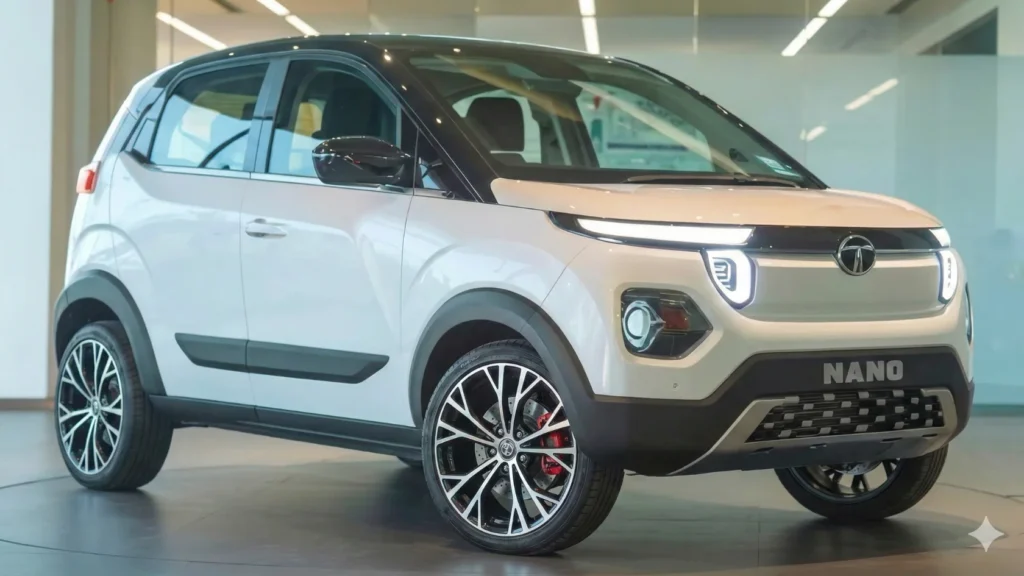
Modern Design and Stylish Exterior
The Nano EV keeps a compact city-first footprint, and the focus stays on practical styling that works in tight lanes and apartment parking. LED headlamps improve night visibility and give the front a cleaner modern look. A closed-style front design, simple bumpers, and smooth body lines support efficiency and reduce repair complexity. Ground clearance and underbody protection matter because speed breakers and broken patches are common in budget localities. A compact EV also needs strong panel fit and durable paint because daily use in crowded areas brings scratches and minor bumps.
Also Read: Bajaj Electric Cycle Pro Launch.! 150Km Assist Range, Removable Battery and ₹6000 Down Payment
Interior and Cabin Experience
Inside, the target is easy daily comfort for short city trips, school drops, and local errands. Seat cushioning and upright posture help in stop-go traffic, and the cabin layout stays simple so controls feel familiar for first-time car owners. A digital cluster that shows speed, battery percentage, and remaining range in Km is essential because range planning matters in a small EV. Cabin storage for bottles and small bags becomes daily convenience. AC efficiency matters because AC usage reduces range, so cooling performance and fan strength become practical value points for Indian summers.
Battery and Driving Range
A 200Km range figure changes charging frequency planning immediately. At 20Km per day it equals 10 days per charge, and at 30Km per day it equals 6.7 days on paper. Real-world range depends on traffic, tyre pressure, passenger load, road gradient, and AC usage, so mixed city use usually settles lower than the top figure. For budget households, the real win is predictable commuting without daily fuel spending. A 5-year battery warranty is a strong confidence point because battery is the biggest cost part, and warranty length reduces ownership fear in the first years.
Charging and Performance
A city EV works best when it can charge from a normal home socket because most ₹3 lakh buyers will depend on overnight charging. Full charging time depends on battery size and charger power, but the real requirement is consistent safe charging without overheating. Performance for this segment is about smooth 0–50Km/h pickup for traffic gaps, not high speed. Stable braking, predictable steering, and a suspension that absorbs potholes decide daily comfort. For families upgrading from two-wheelers, calm and safe driving feel becomes the real performance advantage.
Safety and Technology Features
Budget EV buyers still expect essential safety and useful tech. LED headlamps improve visibility, and parking support features like sensors or a camera help in tight areas if offered. Strong braking stability and good tyre grip matter because city roads demand sudden stops. Clear battery information on the display reduces stress and helps planning. The 5-year battery warranty becomes a key ownership safety factor because it reduces unexpected cost risk. Service reach and spare parts availability also matter because low-income buyers cannot afford long downtime.
Price and Availability in India
Tata Nano EV is being discussed at a ₹3 lakh starting price, and the EMI and down payment decide whether it becomes a real middle-class entry EV. If the on-road price is ₹3.50 lakh and the down payment is ₹50,000, the loan becomes ₹3.00 lakh and on a 60-month plan at 12.00% interest the EMI becomes ₹6,671 per month, while a tighter plan at ₹3.00 lakh on-road with the same ₹50,000 down payment keeps the loan at ₹2.50 lakh and EMI becomes ₹5,559 per month on the same tenure and rate. With electricity at ₹8 per unit and a typical EV running cost band around ₹1.0–₹1.5 per Km depending on efficiency and tariff, 1,000Km monthly use can sit near ₹1,000–₹1,500, which is why a ₹3 lakh entry-price story creates massive budget attention.