Maruti Alto Hybrid: A budget car story is going viral because it targets the exact middle-class pain point—daily petrol expense and tight monthly budgeting. The 38Kmpl mileage number makes people calculate monthly fuel cost instantly, because mileage is still the biggest decision factor in this segment. The ₹2,499 EMI line creates shock because it sounds like a phone EMI, not a car EMI. A small hybrid hatchback also feels practical for Indian cities where parking and traffic are constant problems. That is why this topic is spreading fast, because families imagine a low monthly outgo and a mileage figure that keeps running cost under control.
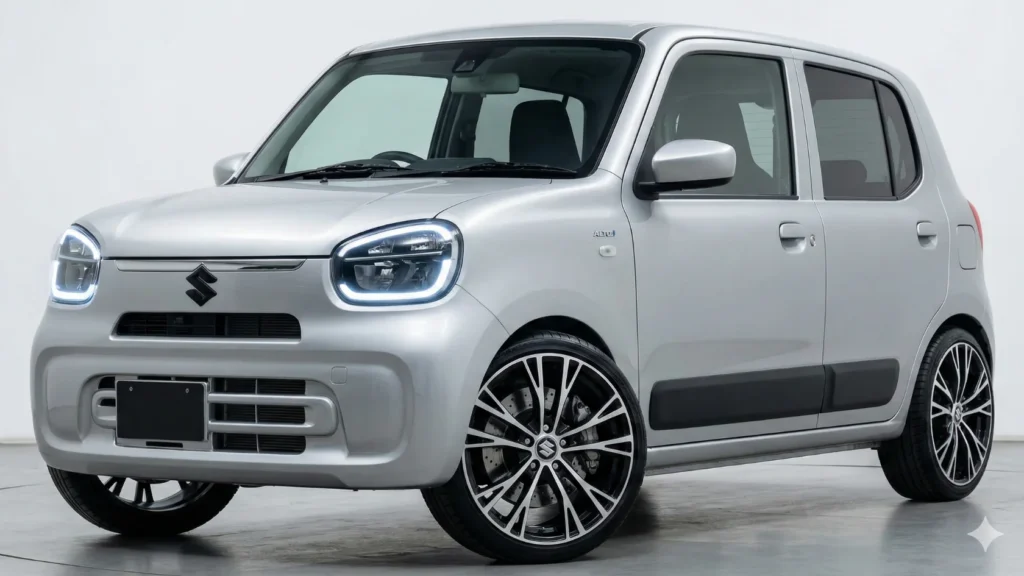
Modern Design and Stylish Exterior
The Alto Hybrid is being positioned as a city-first compact car with a simple, practical body that stays easy to drive and easy to park. A refreshed front design, cleaner bumper lines, and compact proportions help it look modern without becoming expensive to repair. Headlamp design and basic aerodynamic shaping matter because hybrids target efficiency, not aggressive styling. For middle-class families, the exterior value is also about durability because small cars face daily scratches in tight lanes. A compact footprint remains the biggest advantage because it reduces driving stress in crowded markets and apartment parking.
Also Read: Bajaj Electric Cycle Pro Launch.! 150Km Assist Range, Removable Battery and ₹6000 Down Payment
Interior and Cabin Experience
Inside, the focus stays on practical comfort for short daily trips, school drops, and office commuting. A simple dashboard layout and easy-to-reach controls matter because this is often a first family car. Seat comfort and cabin cooling performance matter because budget buyers use the car in peak heat and heavy traffic. A basic digital cluster that shows fuel economy and hybrid assist status makes the hybrid feel understandable for normal users. Storage spaces for bottles and small items improve daily convenience. Middle-class buyers mainly want a cabin that feels easy to maintain and does not start rattling quickly.
Battery and Driving Range
Hybrid ownership is built around fuel saving rather than plug-in charging, so the key promise stays mileage. A 38Kmpl number suggests the system is tuned to use electric assist during low-speed city driving, where petrol waste is usually highest. Real mileage depends on traffic, driving style, tyre pressure, passenger load, and AC use, so actual results vary across routes. The practical benefit of a hybrid is smoother stop-go driving and reduced fuel burn during slow movement. For families, the real advantage is that there is no charging dependency, which keeps usage simple in flats and rented homes.
Charging and Performance
A hybrid does not need home charging in the same way as a full EV, which makes it easier for middle-class buyers to accept. Performance in daily life depends on smooth pickup, predictable throttle response, and low vibration. Electric assist helps at low speeds, making the car feel lighter in traffic. The real value is stable city driving with less fuel waste in stop-go movement. Highway performance still relies on the petrol engine, so consistent cruising and safe overtakes matter. For this segment, comfort and predictable response matters more than high power figures.
Safety and Technology Features
Safety expectations in the budget segment are rising because families now want more confidence even in small cars. Stable braking feel, strong tyres, and a predictable chassis matter in emergency situations. Useful tech features are simple: reverse parking assistance, a basic infotainment system, and clear fuel economy information for daily planning. Hybrid-specific information on the display helps drivers adapt driving style to save fuel. Service network and parts availability matter because middle-class ownership depends on low maintenance shock. Warranty clarity on hybrid components is also important because it protects buyers from unexpected costs.
Price and Availability in India
Maruti Alto Hybrid is being talked about with an EMI line of ₹2,499 per month, and that number only fits when the finance structure is long-tenure with a strong down payment. On a 84-month plan at 10.49% interest, ₹2,499 EMI supports a loan amount of about ₹1.66 lakh, so if the on-road price is ₹6.00 lakh the down payment must be around ₹4.34 lakh, and even at ₹5.00 lakh on-road the down payment must be around ₹3.34 lakh. If the on-road price is ₹4.50 lakh, down payment still stays near ₹2.84 lakh for the same EMI structure. With petrol at ₹105 per litre and 38Kmpl, 1,000Km monthly usage needs 26.32 litres and costs about ₹2,763, which is why the 38Kmpl plus ₹2,499 EMI combo creates massive middle-class attention when people start doing the monthly math.