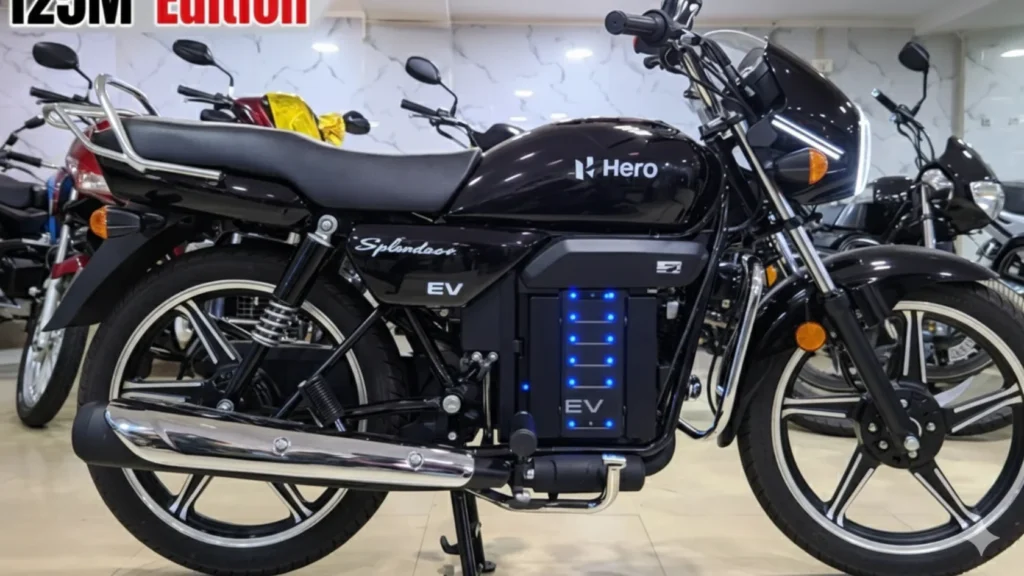
Hero Electric Splendor 2026: Daily bike commuters are now calculating monthly fuel expense, real riding range, and EMI pressure instead of only engine power, and this viral launch discussion directly targets those priorities. Reports claiming around 220Km riding range and commuter motorcycle level top speed have created strong buzz among petrol bike users planning EV shift. However, no detailed official production specification sheet is publicly confirmed yet. If pricing and performance targets come close to these claims, this could target mass 100–125cc commuter bike buyers across India.
Platform Design and Commuter Bike Practicality
If based on commuter motorcycle platform logic, design would likely focus on upright riding comfort, long single seat usability, and lightweight body structure. Expected wheel size would likely stay near 17-inch commuter standard for road stability. Ground clearance would likely remain near 165–175mm to support rural and semi-urban roads. Overall design priority would likely remain durability, mileage efficiency, and low maintenance rather than sporty styling.
Also Read: Bajaj Electric Cycle Pro Launch.! 150Km Assist Range, Removable Battery and ₹6000 Down Payment
Battery Pack and Real Riding Range
If 220Km IDC range claim is targeted, battery capacity would likely fall between 4kWh to 5kWh. Real-world mixed riding range would likely stay near 160–190Km depending on riding speed, load weight, and traffic. For average daily Indian commute of 30–40Km, charging frequency could stay near once every 4–5 days for most users. Removable battery option is possible but not confirmed in any reports.
Motor Power and Performance Expectation
If top speed claim of 120Km/h is targeted, motor peak output would likely need to fall between 8kW to 12kW. This would allow strong city acceleration and highway usable cruising speed. However, for battery efficiency, production models may limit speed closer to 95–105Km/h. Torque delivery would likely focus on low-speed pulling power for traffic riding rather than high-speed racing performance.
Charging Time and Home Charging Support
If designed for mass commuter buyers, standard home 15A socket charging would likely be supported. Full charging time could stay near 5–7 hours depending on battery size. If optional fast charging is supported, 20–80 percent charging could happen in roughly 40–60 minutes depending on charger rating and battery thermal management.
Features and Smart Connectivity Possibility
If positioned as smart commuter electric bike, expected features could include digital instrument console, navigation assist, ride analytics, and mobile app connectivity. Safety hardware could include combined braking system, regenerative braking, and side stand cut-off safety. Premium variants may include keyless start and anti-theft alert integration.
Price and EMI Reality
The ₹78,000 viral pricing may refer to base variant or introductory offer expectation. Realistic production pricing could fall between ₹90,000 to ₹1.25 lakh depending on battery size and performance tuning. If on-road pricing comes near ₹1.05 lakh, a ₹15,000 down payment would leave roughly ₹90,000 loan. On a 36-month loan at around 10 percent interest, EMI could stay near ₹2,900–₹3,200 per month. Running cost could stay near ₹0.20 to ₹0.30 per km depending on electricity tariff.
Disclaimer: This article is based on viral launch claims, early reports, and typical EV motorcycle industry benchmarks. Final specifications, pricing, range, speed performance, and launch plans may change or may not materialise. Buyers should wait for official company announcements before making any booking or purchase decision.