Bajaj Freedom CNG: India’s commuter bike market is being searched aggressively because Bajaj Freedom CNG talk is built on two numbers that daily riders care about every single day. The headline focus is a 102Km/Kg mileage claim and a CNG running cost that targets petrol spending in one hit. A 102Km/Kg figure means a 30Km daily commute can run for 3.4 days on just 1Kg of CNG, and that math makes monthly fuel planning feel predictable for middle-class households. This topic spreads because riders want fixed monthly cost, lower per-Km expense, and less tension every time petrol prices move.
Design and Build Quality
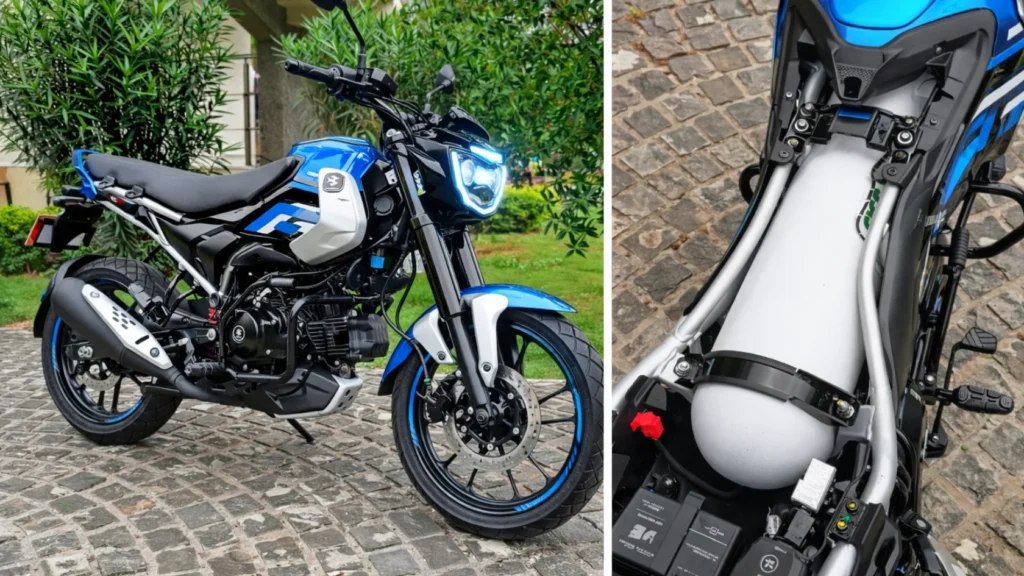
A mass commuter CNG bike needs a rugged frame, tight weld quality, and secure cylinder mounting that stays stable over potholes and speed breakers. Seat length must support 2 adults, footpeg placement must remain comfortable, and suspension must handle broken patches without bottoming out. Heat shielding around the exhaust and fuel lines matters because CNG plumbing must stay protected from high temperatures. Tyre grip and braking feel decide confidence in rain and dusty road conditions. For daily riders, build quality also means easy service access and strong parts availability in Tier-2 cities.
Also Read: Bajaj Electric Cycle Pro Launch.! 150Km Assist Range, Removable Battery and ₹6000 Down Payment
Mileage and CNG Running Cost
The 102Km/Kg mileage claim changes monthly fuel math for commuters. At 30Km per day, monthly riding of 900Km needs 8.82Kg of CNG, and at ₹85 per Kg the monthly CNG cost becomes ₹750. At 1,500Km per month, fuel becomes 14.71Kg and cost becomes ₹1,250 at the same rate. Petrol comparison is the hook, because if petrol is ₹105 per litre and a commuter bike returns 60Km/L, petrol cost becomes ₹1.75 per Km, while CNG at 102Km/Kg and ₹85 per Kg becomes ₹0.83 per Km. That gap makes high-usage riders pay attention immediately.
Performance and Speed Reality
A commuter CNG bike is judged on smooth pickup, not headline top speed. Daily performance in India is decided by clean response from 0–50Km/h, stable cruising at 55–75Km/h, and predictable overtakes without hesitation. Tuning matters because throttle smoothness decides rider confidence in traffic. Added cylinder weight changes balance, so stability on rough patches and braking distance must stay controlled. For most riders, the practical need is low fatigue, stable handling, and consistent pull with a pillion, not aggressive performance.
Features and Safety Features
A useful console must show fuel mode clarity, basic trip data, and service reminders for daily riders. Safety expectations include strong braking hardware, stable tyres, and a chassis that does not wobble on uneven roads. CNG-specific safety depends on leak-proof valves, protected fuel routing, and proper heat shielding near hot zones. Real ownership value comes from warranty clarity, service network readiness, and quick spare availability, because a low running cost only helps when downtime stays low. For commuters, reliability and predictable maintenance cost matter more than flashy add-ons.
Price and EMI Shock
Bajaj Freedom CNG is expected to be priced between ₹95,000 and ₹1.15 lakh depending on variant. EMI plans could start at ₹2,999 per month with a ₹15,000 down payment on a 36-month plan at 12.00% interest, while a higher variant near ₹1.15 lakh can sit close to ₹3,499 per month with a ₹18,000 down payment on the same tenure and rate. With CNG at ₹85 per Kg and a 102Km/Kg claim, running cost sits near ₹0.83 per Km, and compared to petrol at ₹105 per litre and 60Km/L at ₹1.75 per Km, the saving stays around ₹0.92 per Km, which is exactly why this CNG bike math is going viral among daily riders.