Patanjali Electric Bike is suddenly being discussed in viral posts because the headline numbers are designed to hit the mass audience: a 220Km range claim and a “Made-in-India” price rumor that sounds too good to ignore. For budget riders, the logic is simple—if an electric bike gives petrol-bike freedom without petrol cost, it becomes a dream purchase. That’s why this topic is spreading so fast: people are imagining long commutes, delivery work, and daily city riding with a fixed monthly cost instead of daily fuel spending.
Design and Build Quality
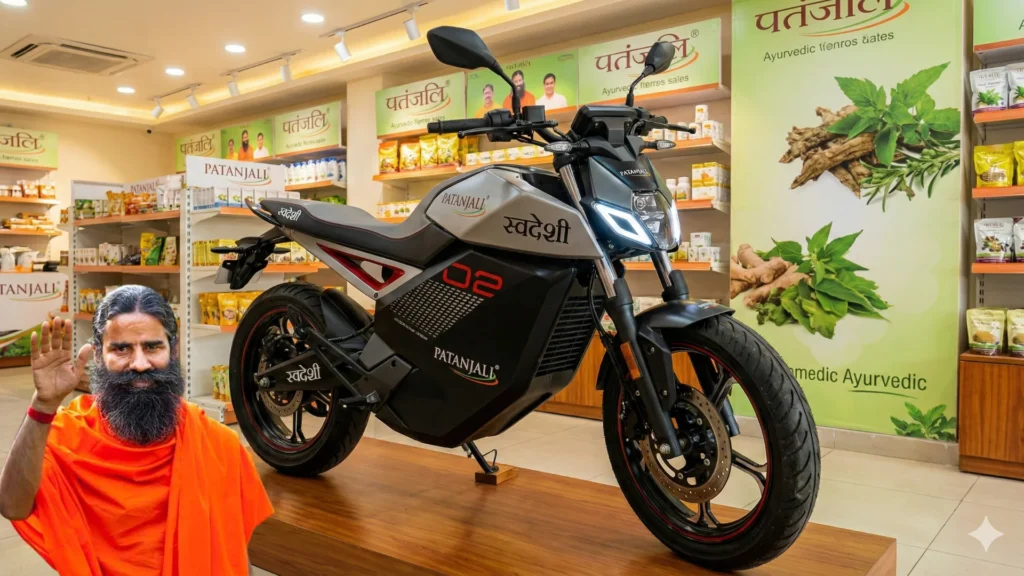
Patanjali Electric Bike is being imagined as a tough, commuter-style motorcycle rather than a sporty showpiece. The expected design talk revolves around an upright posture, long seat for 2 riders, and simple body panels that keep repairs affordable. A strong frame, protected battery housing, and weather-resistant components are expected because Indian bikes face heat, dust, rain, and rough roads every day. Styling is likely to stay clean and practical, with LED lighting and a digital instrument cluster to make it feel modern without looking complicated.
Also Read: Bajaj Electric Cycle Pro Launch.! 150Km Assist Range, Removable Battery and ₹6000 Down Payment
Range and Charging
The biggest viral hook is the 220Km claimed riding range, which would put it in a long-range category for daily users. For riders covering 40–50Km per day, charging could be needed only once every 4–5 days depending on riding mode and conditions. Home AC charging is expected through a normal socket, with a full charge time around 5–7 hours, making overnight charging workable. Fast charging support is also being talked about, with 0–80% in about 60 minutes expected on higher variants, which would make it more practical for high-usage riders.
Performance and Riding Experience
If the range claim is paired with a usable commuter setup, Patanjali Electric Bike is expected to deliver smooth city performance with instant torque for easy starts and clean overtakes. A practical top speed of 105–115Km/h is expected to keep it flyover and highway-capable for short stretches. The silent, vibration-free ride reduces fatigue for daily users, and the low center of gravity from the battery pack can improve stability during braking and cornering, especially when riding with a pillion.
Features and Safety Features
Expected features include a digital instrument cluster showing speed, battery level, range, and ride modes. Safety support is likely through disc brakes, strong tyres for grip, and ABS or combined braking depending on variant. Regenerative braking modes are expected to improve efficiency in city traffic. The bigger “safety” factor for mass buyers would be reliability and service support, because long-range claims only matter if the bike stays dependable over years.
Price Rumor and EMI Buzz
The “Made-in-India price” rumor is what makes the topic feel like chaos, because people are sharing it as if the bike will be priced near ₹85,000–₹95,000 for mass buyers. If that pricing becomes real, EMI could start around ₹2,499–₹2,999 per month depending on tenure and down payment. With electricity cost around ₹1.0–₹1.3 per Km, monthly running expense would stay far lower than petrol, which is exactly why the rumor is spreading so fast. The combination of a 220Km claim plus an aggressive Indian price is what’s making this story go viral overnight.