Tata Nano EV is back in conversations across India as talk of an electric comeback gathers serious momentum. Once known as the people’s car, the Nano is now being positioned as a no-frills, city-focused electric vehicle aimed at budget buyers, first-time car owners, and two-wheeler upgraders. With a claimed 250Km range and an expected ₹5 lakh price point, the Nano EV is being seen as a potential disruptor that could finally make electric cars realistic for mass-market households.
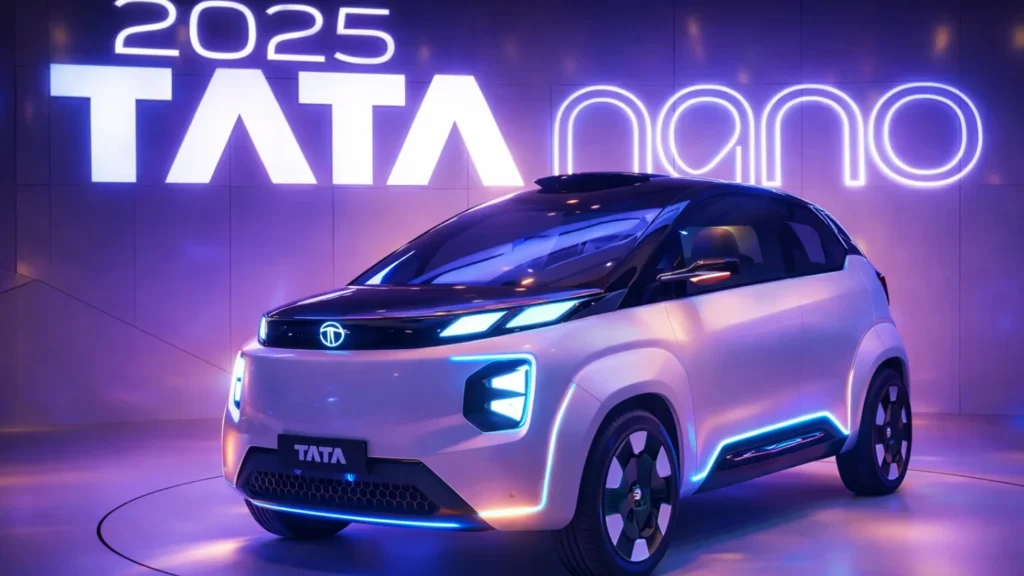
Design and Build Quality
Tata Nano EV is expected to retain its compact, city-friendly footprint while adopting a more modern and confident design. Short overhangs, a tall cabin, and improved proportions make it easy to drive and park in crowded urban areas. Build quality is a key focus this time, with a stronger body structure and better material finish compared to the earlier Nano. The emphasis is on durability, safety, and practicality rather than flashy styling, keeping ownership simple and cost-effective.
Also Read: Bajaj Electric Cycle Pro Launch.! 150Km Assist Range, Removable Battery and ₹6000 Down Payment
Range and Charging
The biggest highlight driving the buzz is the 250Km driving range, which is well-suited for daily city commuting. For users covering 20–30Km a day, this range allows multiple days of use on a single charge. Charging is designed to be straightforward and home-friendly, using a regular household socket for overnight charging. This simple charging approach reduces dependency on public infrastructure and keeps running costs extremely low for urban families.
Performance and City Driving Experience
Tata Nano EV is tuned purely for city use, focusing on smooth acceleration and easy maneuverability rather than high-speed performance. Instant electric torque makes traffic driving effortless, while light steering and a compact size help new drivers feel confident behind the wheel. The silent and vibration-free electric drive improves comfort during daily commutes, making it a stress-free upgrade from two-wheelers.
Features and Safety Features
The Nano EV focuses on essential features needed for everyday use. A digital instrument cluster displays speed, battery level, and range clearly, while the simple infotainment setup keeps controls easy to understand. Safety is supported by a reinforced body structure, seat belts for all occupants, and braking systems tuned for city speeds. The approach keeps costs under control while offering a safer alternative to two-wheelers.
Price and Market Impact
With an expected price of around ₹5 lakh, Tata Nano EV could become one of the most affordable electric cars in India. At this pricing, it directly targets budget-conscious buyers who were previously priced out of the EV market. Low running costs, minimal maintenance, and Tata’s strong service network add to its appeal. If launched as discussed, the Nano EV has the potential to reshape the entry-level EV segment and bring electric car ownership within reach of millions.